Underlayment is the layer that helps protect a shingle roof when water gets past the shingles. Wind drives rain up under the laps, water finds its way around nails, and ice backs up under the bottom courses. The shingles shed most of the water. The underlayment provides a secondary defence. There are three kinds worth knowing: asphalt-saturated felt, synthetic underlayment, and self-adhered ice and water shield. They are not interchangeable, and the right choice depends on the slope of the roof, the climate it sits in, and how long the deck may sit uncovered before the shingles go on. The time to settle it is before the order goes in, not after the shingles arrive.
What the Layer Under the Shingles Actually Does
A shingle roof is a water-shedding system, not a waterproof one. The shingles are the first defence, laid in overlapping courses so gravity carries water down and off. Underlayment is the second defence, a sheet over the deck that helps protect it from water that gets past the shingles. It also helps protect the deck while the roof is being built, so a shower during installation does not soak the plywood before the shingles cover it. Without it, every nail hole and every lifted lap is a direct path to bare wood. With it, the roof has a backup when a shingle cracks, a lap lifts in a storm, or ice dams push water uphill. That is why the underlayment line on a quote deserves the same attention as the shingle line, and why the cheapest sheet is not always the cheapest roof.
Asphalt-Saturated Felt: The Traditional Sheet
Felt is the original underlayment, organic felt saturated with asphalt, and it is still a budget-conscious way to cover a deck. It comes in two types under ASTM D226: Type I, commonly called No. 15 felt, and Type II, commonly called No. 30. The heavier sheet can provide greater resistance to tearing at the fasteners. Felt's weakness is time in the open. Sun and weather work on the asphalt, and ASTM D4869 describes a two-week exposure objective for resistance to wrinkling, puckering, and shrinking. This is not a universal exposure rating: check the product's own instructions and cover it promptly. Left exposed, felt can wrinkle and deteriorate, and wrinkled felt can telegraph through the shingles above it. Felt makes sense where the roof will be covered fast and the budget is tight. It is a poor pick for a job that may sit open while the crew waits on weather, materials, or an inspection.
Synthetic Underlayment: Lighter, Stronger, Longer in the Sun
Synthetic underlayment is a woven or spun polypropylene or polyethylene sheet, and it is widely used on production roofing crews in the United States for straightforward reasons. A roll can cover far more roof than a roll of felt, it weighs less per square, and many products resist tearing at the fasteners, which matters on a windy deck and on a steep one. The practical difference is the exposure window. Synthetic products carry manufacturer-rated ultraviolet exposure limits that vary by product, so check the roll's instructions before leaving it exposed. Two things to watch. Synthetic is a category, not a single product, so the standard printed on the roll is what counts: ASTM D8257 is listed in the 2024 International Residential Code. Fastener type and spacing must follow local code and the underlayment manufacturer's instructions. Before ordering, check that the shingle maker's installation instructions accept the synthetic being supplied, since the manufacturer's instructions are part of what the code enforces.
Self-Adhered Ice & Water Shield: The Membrane for the Places That Leak First
Ice and water shield is a different animal from felt and synthetic. It is a self-adhering polymer-modified bitumen membrane, ASTM D1970, that sticks to the deck and is designed to seal around the nails driven through it. It goes where water concentrates and where it backs up: along the eaves, in the valleys, around chimneys and skylights, and on any low-slope section that ties into the main roof, as specified by local code and product instructions. In areas with a history of ice forming along the eaves, the International Residential Code, Section R905.1.2, calls for an ice barrier running from the eave edge to at least 24 inches inside the exterior wall line. The number of courses depends on roof geometry and overlaps and must be calculated for the actual roof. The membrane is a backstop, not a cure. Ice dams start with heat leaking into the attic, and the fix for that is air sealing, insulation, and ventilation, as covered in Asphalt Shingle Roof Ventilation: Why Balanced Airflow Matters as Much as the Shingle. One practical note for cold-weather work: many self-adhered membranes list a minimum application temperature, and below it the bond may be weak, so a late-autumn re-roof needs the product's own temperature limit checked before the crew starts. SANER's self-adhered waterproof membrane was part of the system supplied for the Maldives resort villa project in SANER Delivers Asphalt Roofing Materials for Maldives Resort Villa Project.
Slope Decides How Much Underlayment a Roof Gets
The slope of the roof sets the minimum. On slopes of 4:12 and steeper, one layer of underlayment is the usual requirement. From 2:12 up to 4:12, water moves slower and lingers longer, so the code generally calls for two layers, subject to applicable provisions and product instructions. Below 2:12, asphalt shingles are not the right covering at all, and the shingle maker's instructions will say so. Local codes govern the actual job and do not all adopt the same edition, so these figures are a benchmark for sizing an order, not a substitute for the building department's answer. The point for a buyer is simpler: the underlayment quantity on a quote should change with the slope, and a quote that lists the same single layer for a steep main roof and a low-slope porch section has not been thought through.
Ordering Underlayment With the Shingles
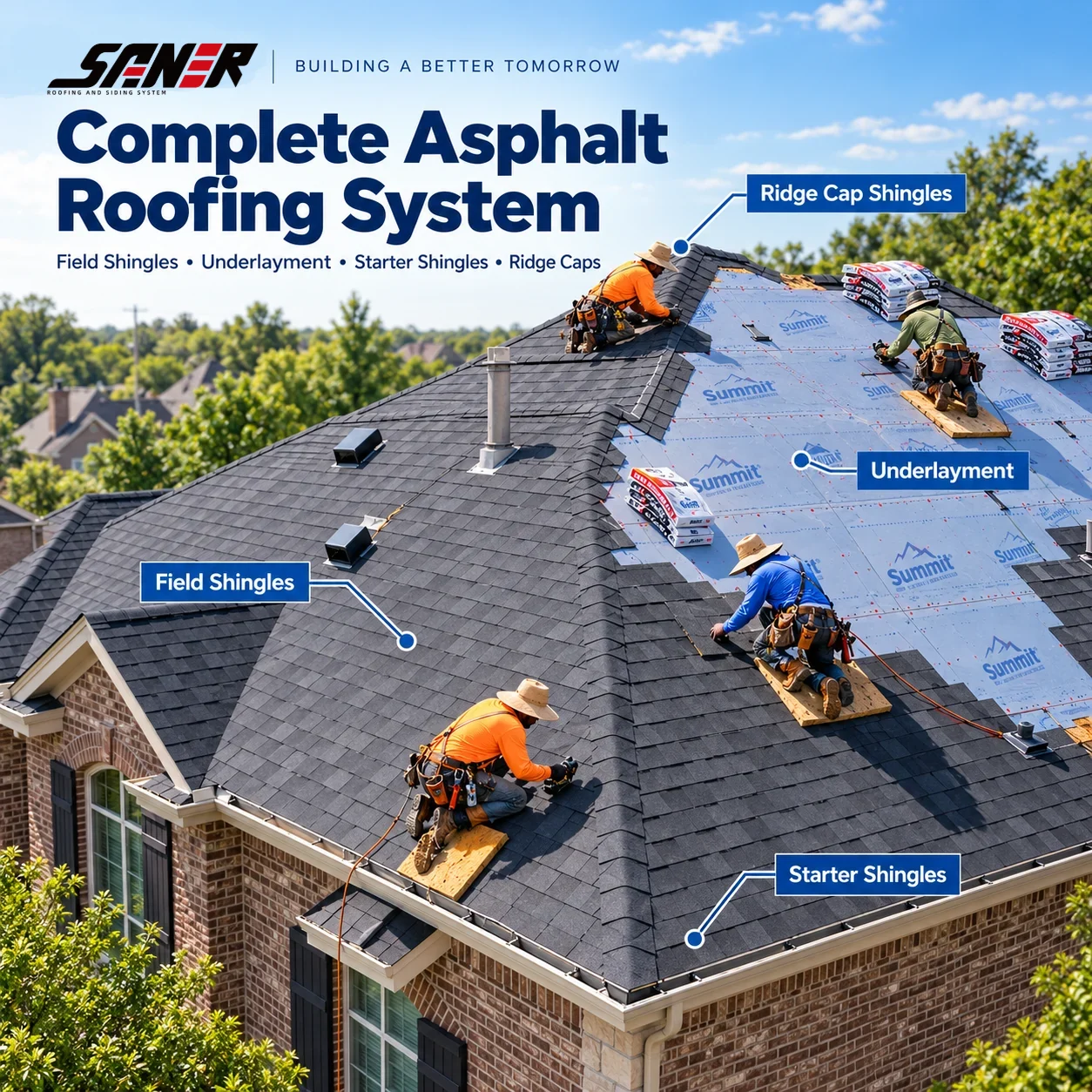
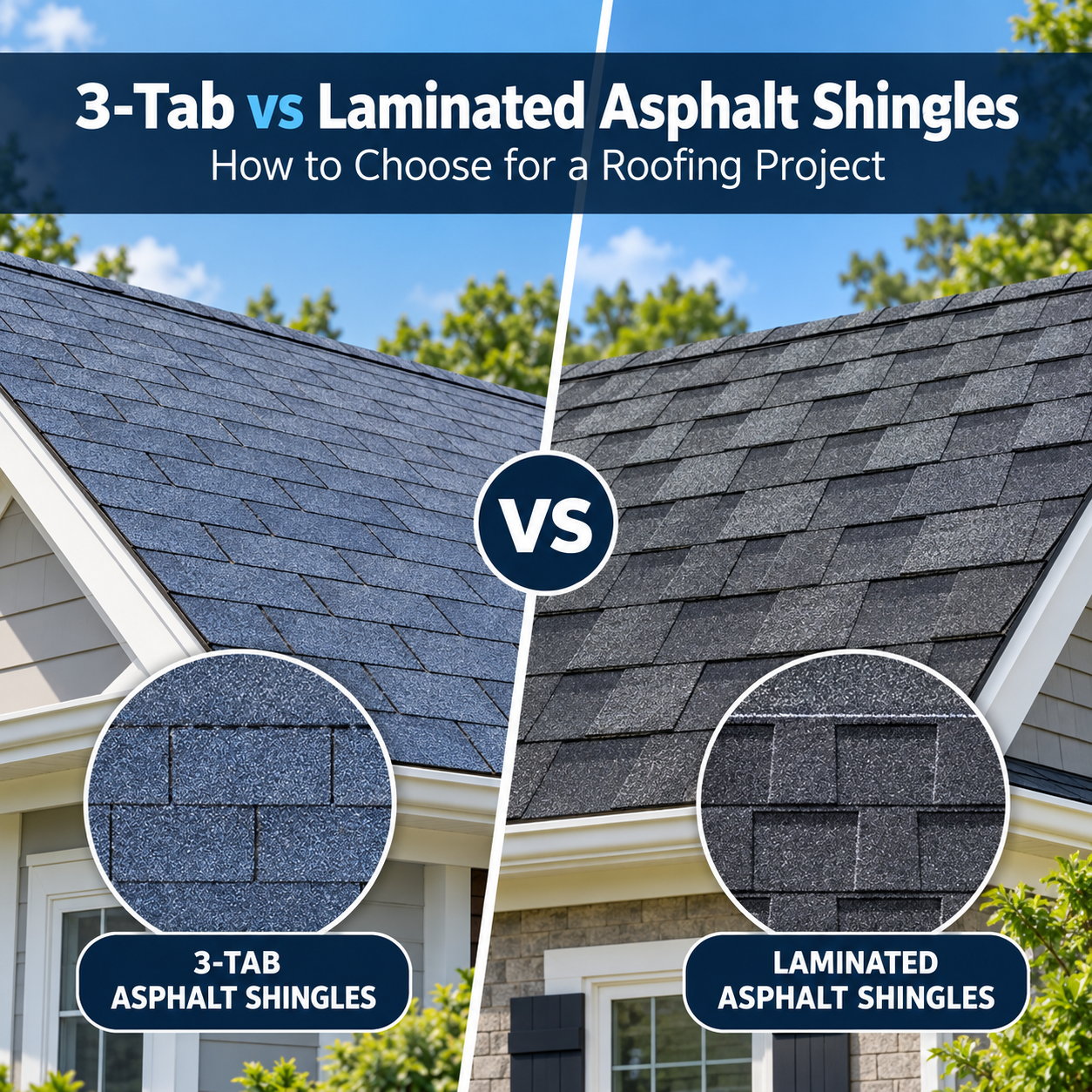
Underlayment should be priced as part of the roofing system, not discovered after the shingles arrive. A complete order for an asphalt roof pairs the shingles with the underlayment the slope and climate call for, extra self-adhered membrane for the eaves and valleys, starter shingles, ridge caps, and the ventilation the roof needs. When checking a quote, ask for the standard printed on the roll, the product's exposure limit, the fastener type, and the membrane allowance for the eaves and valleys, and check the shingle maker's instructions for the exact product line being ordered, since many manufacturers tie warranty coverage to the underlayment used. The buying overview in Everything You Need to Know About Asphalt Shingles: Benefits, Types, Applications, and Buying Guide is a useful cross-check for product types and applications, the comparison in 3-Tab vs. Laminated Asphalt Shingles: How to Choose for a Roofing Project helps settle which profile suits the roof layout, and Asphalt Shingle Lifespan: What Really Determines How Long a Roof Lasts explains why climate and installation quality matter as much as the product itself.
SANER has supplied asphalt shingles since 2002 and exports to more than 55 countries, with 3-Tab, laminated, and other profiles available for OEM and ODM projects, backed by a 30-year warranty. For product details or a project inquiry, contact SANER at [email protected] or +86-15988487144, or browse the asphalt shingle range and the contact page.
Frequently Asked Questions
What is the difference between felt, synthetic underlayment, and ice and water shield?
Felt is an asphalt-saturated sheet; synthetic underlayment is typically a lightweight polymer sheet; and ice and water shield is a self-adhered membrane used where additional protection is specified. Their installation and exposure limits differ by product.
Does a low-slope asphalt shingle roof need extra underlayment?
For slopes from 2:12 up to 4:12, the 2024 IRC generally specifies two layers. Check the locally adopted code and the manufacturer's instructions for the actual assembly.
How far should an ice barrier extend?
Where required by the IRC, it extends from the lowest roof edge to at least 24 inches inside the exterior wall line. Roof geometry, local rules, and product instructions determine the layout.
How long can underlayment remain exposed?
Follow the specific manufacturer's rated exposure limit. Weather, installation conditions, and local requirements can impose additional limits.
 EN