 EN

Asphalt Shingle Roof Ventilation: Why Balanced Airflow Matters as Much as the Shingle
2026/11/09
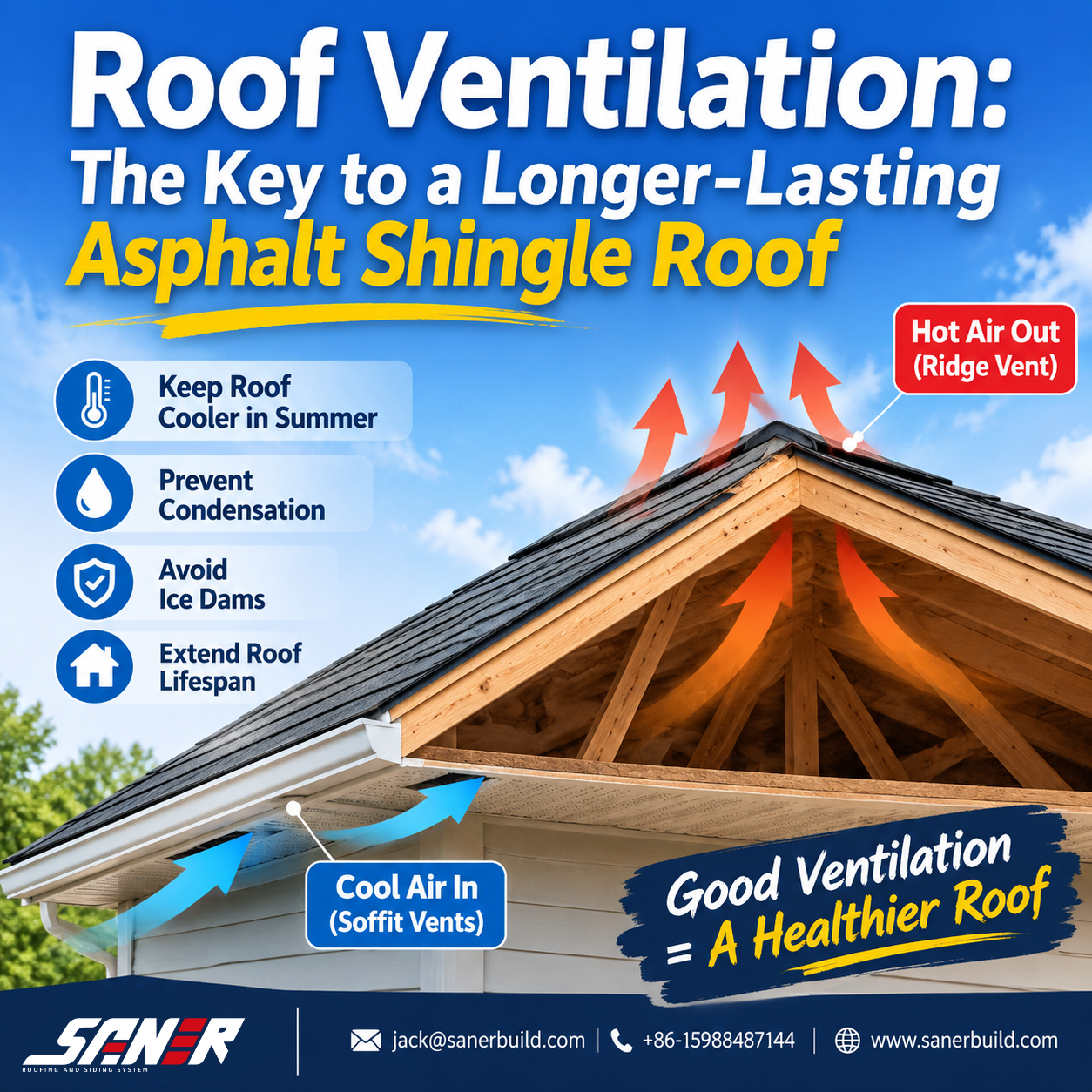
Asphalt shingle roof ventilation: balance soffit intake with ridge exhaust, size it by net free area, and avoid the mistakes that shorten roof life.
Asphalt shingles are the part of a roof everyone sees, but the purchasing list rarely ends with the visible field shingles. A complete asphalt roofing system also includes products that start the first course, cover vulnerable areas beneath the roof covering and finish ridges and hips. The precise combination depends on the building design, local requirements and the installation method selected by the project team.
For an importer or contractor, overlooking a small accessory can create a large scheduling problem. A shipment may arrive with enough shingles to cover the roof area but too few ridge caps to complete it. This guide explains the main components and the information a buyer should provide before asking for a system quotation.
Field shingles cover the main roof planes and determine much of the finished appearance. SANER lists 3-tab and laminated asphalt shingles among its roofing options. Before calculating a quantity, identify the exact profile, color and stated coverage of the proposed SKU. Measure each roof plane rather than relying only on the building's floor area; slopes, overhangs and roof geometry affect the material takeoff.
Waste allowance should be reviewed with the installer. A simple rectangular roof and a roof with many valleys, dormers and hips can require different cutting allowances. Keep the approved takeoff and product specification with the purchase order so later changes can be traced.
Roofing underlayment is installed beneath the shingles as part of the specified roof assembly. Its type, overlap, fastening and placement should follow the chosen product instructions and project design. SANER's asphalt shingle range also includes underlayment and waterproofing products. Those products have different intended uses, so buyers should not assume that one roll can be substituted for another.
Eaves, valleys and penetrations often need particular attention in a roof detail. The drawings and local rules should define where additional waterproofing is required. Ask for a drawing or marked-up roof plan identifying each condition instead of treating the entire roof as one uniform surface. Confirm how the selected membrane interfaces with the deck, underlayment, shingles and metal flashing specified for the project.
Starter shingles establish the first shingle course at the eaves and, where specified, other edge locations. Their purpose is different from that of the visible field shingles. The installer should confirm the starter product, orientation, fixing method and required lengths for the exact roof assembly.
A common purchasing mistake is to estimate starter shingles from total roof area. They are usually planned against relevant edge lengths, subject to the chosen detail and product coverage. Provide eave and rake measurements on the roof plan, then confirm quantity with the installer and supplier. If the project has several roof sections, list their measurements separately to reduce omissions.
Ridge cap shingles finish the lines where roof planes meet. They also have their own dimensions and coverage, so their quantity should be based on the specified ridge and hip lengths, not inferred from the field-shingle order. Confirm the cap profile, color coordination and installation instructions before the order is released.
Ridge ventilation, if included in the roof design, must be coordinated with the selected cap detail. The final arrangement belongs in the project drawings. A photo of a finished ridge can help approve the appearance, but it does not replace the assembly specification.
Send the supplier a roof plan showing each slope, pitch, ridge, hip, valley, eave, rake and penetration. Include the project location, intended deck construction, chosen field shingle and preferred color. Ask for the proposed asphalt roofing system to be itemized by product, unit, coverage assumption and quantity. Mark any item that is provided by another contractor, such as flashing or fasteners, so the scope is unambiguous.
Before production, compare the supplier's list with the installer's takeoff. Check samples, batch references, packaging and the expected delivery sequence. This is especially useful for export orders: a missing accessory discovered after arrival may be slower and more expensive to source locally than it was to identify during planning.
SANER offers shingles, starter shingles, ridge cap shingles and roofing underlayment within its product range. View the SANER asphalt roofing products and share your roof drawings to discuss a coordinated quotation. The final assembly and installation details should be approved for the project and destination market.
Can one underlayment be used everywhere? Not automatically. Roofing underlayment and self-adhering waterproofing products can serve different purposes. Their locations and compatibility should be shown in the approved roof detail. Ask the project team to identify each material by name and location rather than ordering an unspecified roll.
Are ridge caps included with field shingles? Do not assume so. Request separate line items for ridge cap shingles, starter shingles and other accessories, including their coverage units. Check the proposed quantities against ridge, hip and edge lengths. A complete asphalt roofing system quotation should make these assumptions visible.
What if the roof plan changes? Recalculate the takeoff before finalizing production. A new dormer or revised ridge can change both field material and accessory quantities. Record the drawing revision used for the order so the supplier and installer are working from the same version.
2026/11/09
Asphalt shingle roof ventilation: balance soffit intake with ridge exhaust, size it by net free area, and avoid the mistakes that shorten roof life.

2026/10/24
How does stone-coated metal roofing perform in salty, humid coastal air? Corrosion layers, condensation risks, and the checks that decide roof life.
2026/10/09
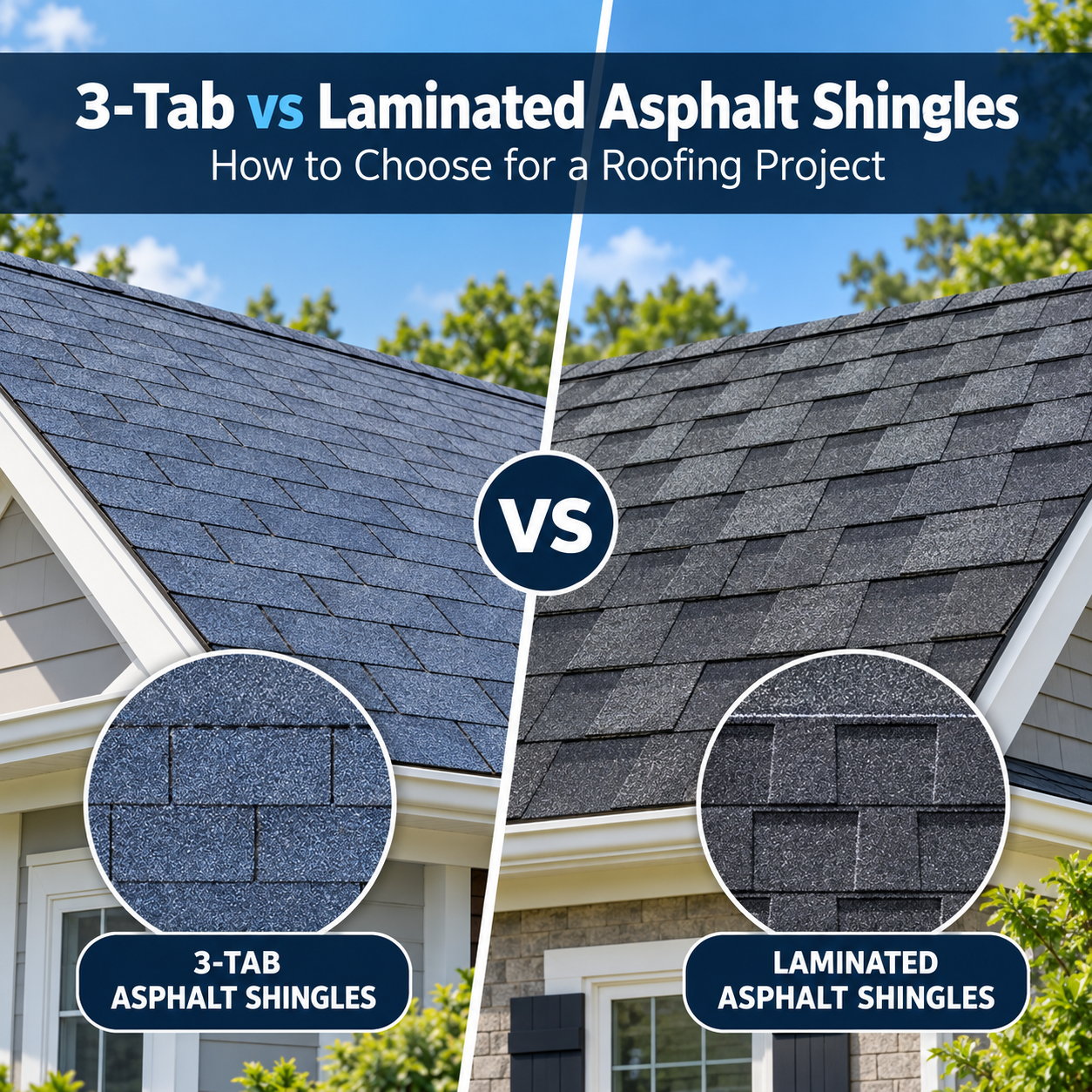
Compare 3-tab and laminated asphalt shingles by appearance, roof layout, accessories and purchasing requirements. Learn what to ask before requesting a quote.

2026/09/23
SANER supplied 3-Tab Asphalt Shingles and Self-Adhered Waterproof Membrane for a Maldives resort villa project, providing reliable roofing solutions for tropical environments.

2026/09/17
How long do asphalt shingles really last? Learn why climate, ventilation, installation and roof design can make a 30-year reference very different in real life.
