Flashing is the set of thin metal pieces and membranes, shaped to each roof detail, that catch water where shingles cannot cover a joint and send it back onto the roof surface or off the edge. Most leaks on an asphalt shingle roof do not start in the middle of the field. They start where the roof changes direction or meets something else — the edges, the walls, the valleys, the chimney, the vent pipe. Shingles shed water down a slope well, and carry it across a joint poorly. A roof with sound shingles and bad flashing still leaks, and the leak usually shows up far from where the water got in. That is why flashing deserves its own line on the order, checked before the shingles arrive rather than improvised on the day.
What Does Drip Edge Do?
Drip edge is the bent metal strip that wraps the edge of the roof deck, at the eaves and at the rakes, and it is the piece most often skipped on a cheap job. Its job is simple: it throws water clear of the fascia and into the gutter, or off the rake, instead of letting it wick back under the lowest course and rot the deck edge.
The International Residential Code, Section R905.2.8.5, requires it at eaves and rake edges of shingle roofs, with adjacent pieces overlapped not less than 2 inches, extending not less than a quarter inch below the roof sheathing and not less than 2 inches back onto the deck, fastened to the deck at not more than 12 inches on center. One detail is easy to get backwards and worth checking on site: underlayment goes over the drip edge along the eaves and under it along the rakes, so water running down the underlayment lands on the metal at the eave and is not trapped behind it at the rake. The common materials are aluminum and galvanized steel, and the shingles should overhang the drip edge slightly, so the drip falls clear. When a quote has no drip edge line, the edge of the deck is unprotected, and the first repair the roof will need is the one at its edges.
How Does Step Flashing Work Where a Roof Meets a Wall?
Where a sloped roof runs up against a vertical wall, a single long piece of metal cannot follow the steps of the shingle courses. Step flashing solves this with individual L-shaped pieces, one woven in with each course, so every shingle has its own flashing piece lapping over the one below it. The code calls for base flashing at sidewalls of at least 4 inches high and 4 inches wide, and the wall leg of the flashing must run up under the siding or behind counterflashing, never left exposed on the face of the wall.
Caulk is not a substitute for this overlap: sealant dries, cracks, and peels, while a stepped overlap keeps working even after the sealant is gone. The related piece that gets missed most often is kick-out flashing, the small diverter where a roof edge ends at a sidewall. Without it, water running down the wall-side of the roof dumps straight into the wall behind the siding, and the rot it causes stays hidden until the siding comes off. A kick-out is a small piece of bent metal, and it belongs on the order with the step flashing.
How Should a Valley Be Built?
A valley is where two roof planes meet, and it carries the water of both, so it is the hardest-working joint on the roof. The standard ways to build one are an open valley, where a metal lining shows between the shingle edges, and a closed valley, where the shingles of one slope run across and are cut along the valley line. For an open valley, the code calls for a metal lining not less than 24 inches wide, and beneath any valley, a self-adhered ice and water membrane is the usual second defence, since a valley concentrates water and any nail hole or lifted edge there leaks straight onto the deck.
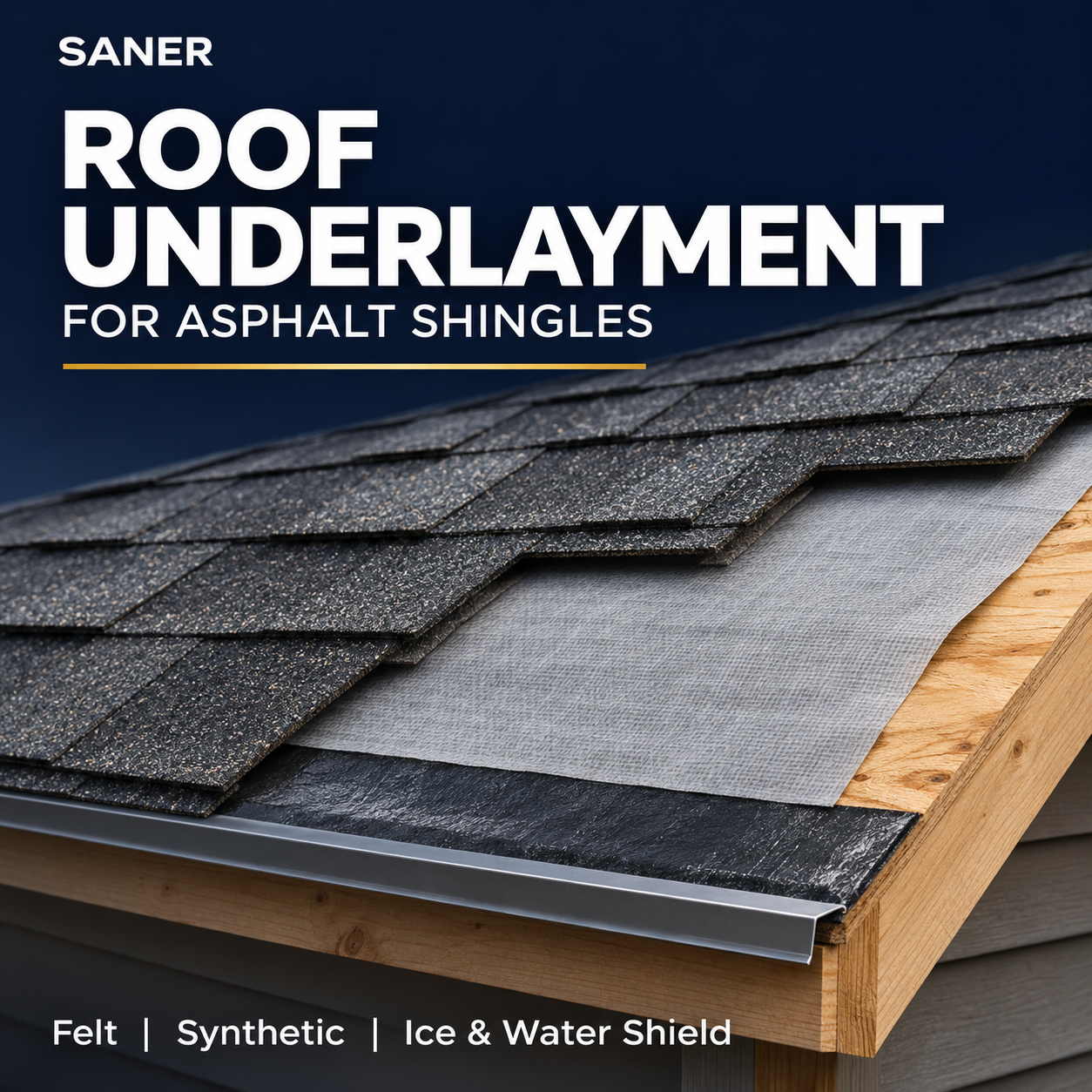
Two habits keep valleys working: never drive a nail through the middle of the valley lining, where the hole sits in the path of the most water, and keep the valley clear of leaves and debris, which dam water and push it sideways under the shingles. How a valley should be built and lined is covered in more depth in Roof Underlayment for Asphalt Shingles: Felt, Synthetic, and Ice & Water Shield, since the membrane under the valley is part of the same system.
What Flashing Does a Chimney or Skylight Need?
A chimney is the largest hole in a roof, and it gets a flashing system rather than a single piece: step flashing up both sides, woven into the shingle courses, an apron flashing across the downhill face, and counterflashing set into the mortar joint and folded down over the step flashing so water running down the chimney face lands on the roof, not behind the flashing. Where the chimney is more than 30 inches wide, measured across the slope, the code calls for a cricket or saddle on the ridge side, a small peaked structure that splits the water and sends it around both sides instead of letting it pond against the back of the chimney.
Skylights follow the same logic but with a manufacturer-supplied flashing kit, and the kit's instructions govern, since a skylight flashing that does not match the unit is a leak waiting for the first storm. Chimney and skylight flashing should be checked whenever the roof is checked, because the counterflashing and the seal at the mortar joint are the parts that age first.
What About Pipe Boots and Small Penetrations?
Every plumbing vent, exhaust vent, and small pipe through the roof gets its own flashing, usually a rubber boot flashing that fits over the pipe and is shingled into the courses above it. The boot is a wearing part: sun and weather harden the rubber over the years, and a cracked boot is one of the most common small leaks on an otherwise sound roof. That is why pipe boots belong on the re-roof list as new material, not as items to be carried over, and why the boot size has to match the pipe diameter, since a boot stretched over an oversized pipe splits early and one left loose around an undersized pipe never seals. Sealant around the top of the boot is a backup, not the seal itself, and like all sealant on a roof it needs checking over time.
Which Flashing Metal Should You Order?
Flashing metal has to be corrosion-resistant and, for metal flashing, not less than 0.019 inch thick under the code, which is the thickness of No. 26 galvanized sheet. The usual choices are galvanized steel, aluminum, stainless steel, and copper, and the choice is not only about cost: metals in direct contact with each other can corrode where they touch, so the flashing and the fasteners and the roof covering need to be compatible. On the coast, stainless steel fasteners and compatible flashing are the safe combination, since ordinary carbon steel screws rust out first and leave the flashing loose.
The same care applies to stone-coated metal tiles, whose Galvalume-type aluminium-zinc coating should not sit in direct contact with copper or lead flashing, since that contact is a real galvanic corrosion risk. For the stone-coated option, the coastal checks are laid out in Stone-Coated Metal Roofing for Coastal Climates. Before ordering, confirm the flashing metal with the shingle or tile supplier for the exact product line being ordered, since the manufacturer's installation instructions are part of what the code enforces.
How Should Flashing Be Ordered With the Shingles?
Flashing is ordered by the detail, not by the square, and the time to count it is when the shingles are counted. A complete order for an asphalt roof pairs the shingles with drip edge for every eave and rake, step flashing for every wall run, valley lining for every valley, a chimney flashing set with a cricket where the chimney is wide enough to need one, pipe boots in the right sizes, kick-out flashing where a roof ends at a wall, and self-adhered membrane under the valleys and around the chimney and skylights. Old flashing should not be carried over to a re-roof: step flashing is woven into the shingle courses it was installed with, so removing the old shingles damages it, and drip edge comes off bent.
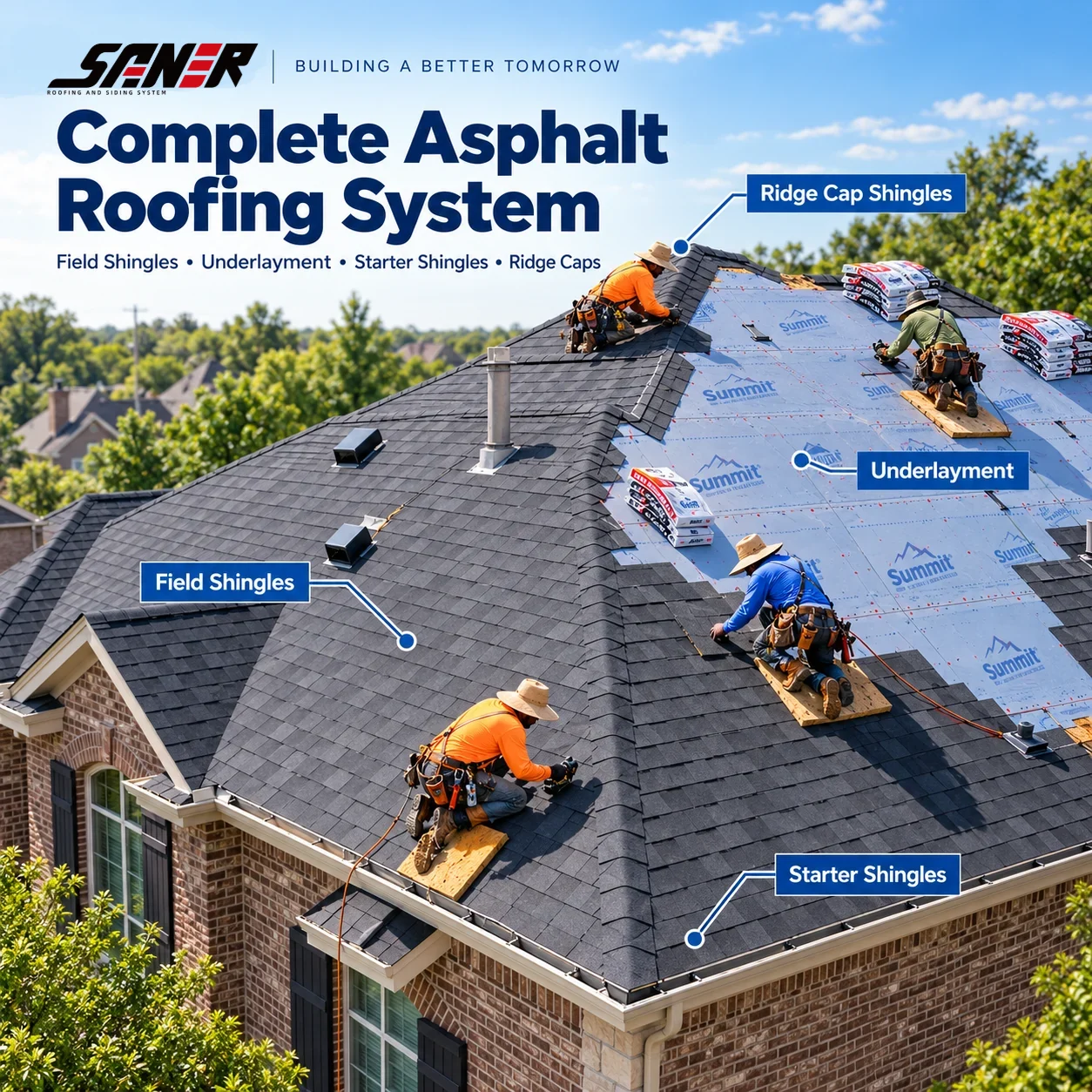
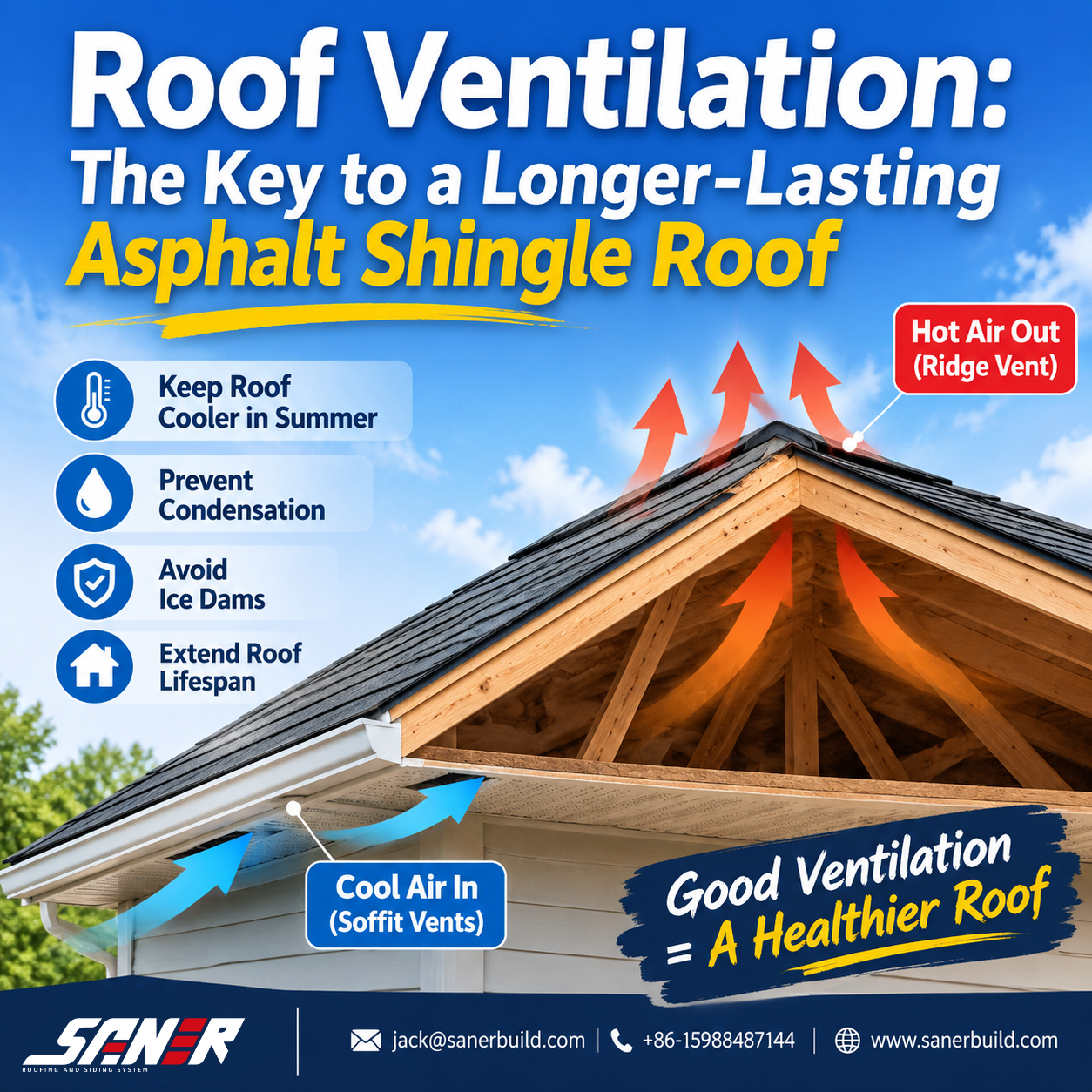
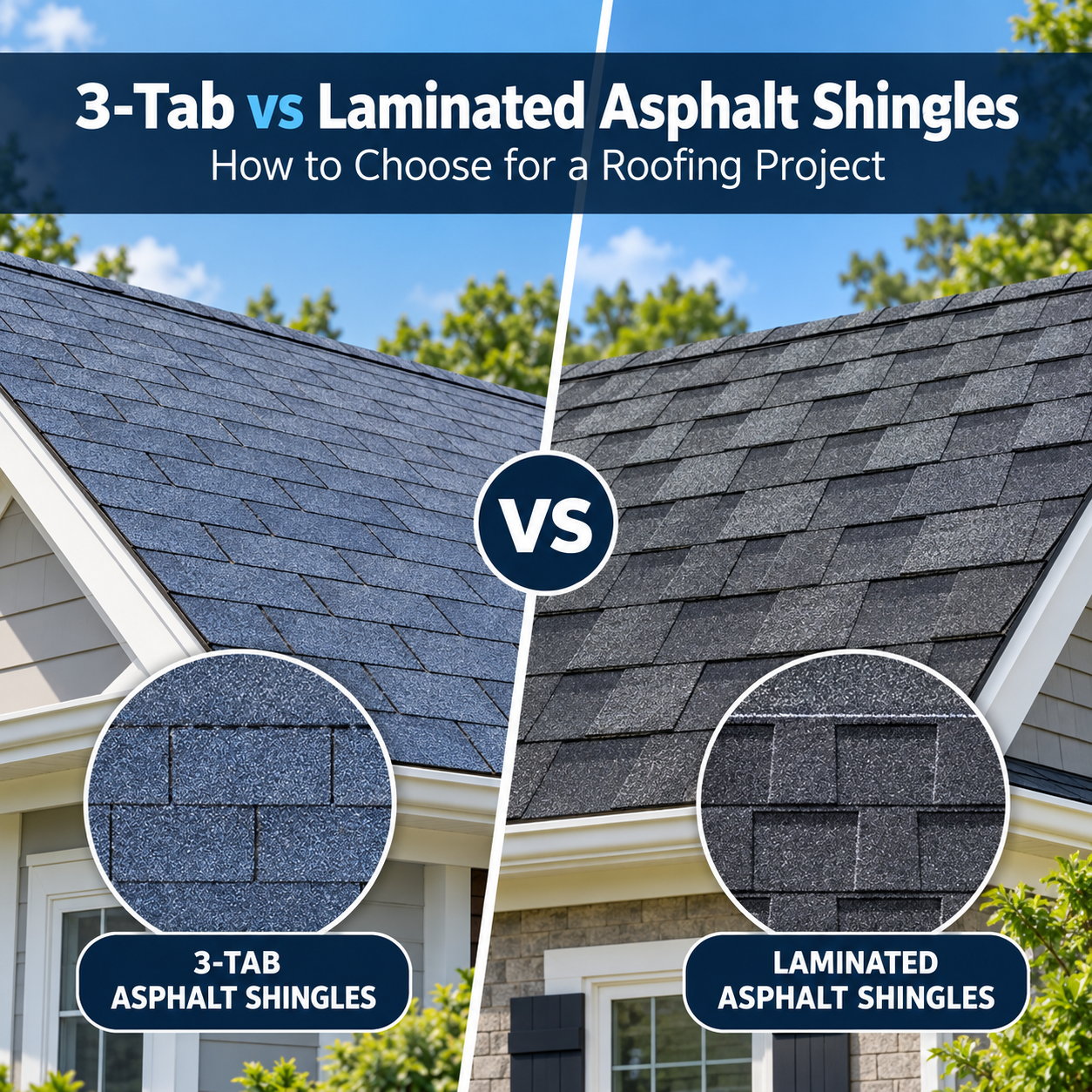
The full set of parts that belong together is laid out in What Goes Into a Complete Asphalt Roofing System?, and the buying overview in Everything You Need to Know About Asphalt Shingles: Benefits, Types, Applications, and Buying Guide is a useful cross-check for product types and applications. The comparison in 3-Tab vs. Laminated Asphalt Shingles: How to Choose for a Roofing Project helps settle which profile suits the roof layout, and Asphalt Shingle Roof Ventilation: Why Balanced Airflow Matters as Much as the Shingle explains why the air moving under the roof matters as much as the pieces on top of it. Before confirming, ask the supplier for the installation instructions for the exact product line being ordered, and check the flashing list against them, so the warranty position is clear before work starts rather than argued about afterwards.
SANER has supplied asphalt shingles since 2002 and exports to more than 55 countries, with 3-Tab, laminated, and other profiles available for OEM and ODM projects, backed by a 30-year warranty. For product details or a project inquiry, contact SANER at [email protected] or +86-15988487144, or browse the asphalt shingle range and the contact page.
 EN